


Samantha Reisman
Main Dissertation Grant
(N=3,000)
Empowering The Best Multi-Country Doctoral Research Projects in 2026
We created this grant to support early-career researchers who are pushing behavioral science beyond the West. Read how and why we started it.
Join Besample
The 2026 competition unfolds in two stages: first, 25 finalists receive free pilot data collection (N = 500) through Besample for their dissertation prospectus or pre-defense. These grantees present their preliminary results in an online pitch contest. Three winners receive full funding for their dissertation studies, including translations, data collection support, and specific demographic targeting.Applications are now closed. Meet the winners and finalists below.
Besample selected 30 early-career researchers to conduct pilot studies across 16 non-Western countries. Following six months of research, the pilot-stage grantees presented their findings in the final competition before an academic jury and the broader Besample community.
The three recipients of the full Besample Dissertation Grant were selected through a two-round voting process by a jury of leading behavioral researchers.
In addition to the three main Dissertation Grants, two finalists received special recognition through the Audience Choice Award and Besample Choice Award.
Main Dissertation Grant

Main Dissertation Grant

Main Dissertation Grant
Audience Choice Award

Besample Choice Award
We received over 100 submissions, and selecting just 25 pilot-stage winners was not easy. Many strong proposals could not be accommodated.
The grantees below were selected through a two-stage review process, which included an initial evaluation followed by methodological clarifications where needed. Applications were assessed based on idea novelty, theoretical grounding, potential contribution to the field, research rigor, alignment with Besample's mission to research beyond the West, and feasibility within Besample's research infrastructure.
M.S., Department of Psychological and Behavioural Science, London School of Economics, UK
How do gender norms and cultural context shape employees’ use of workplace mental health resources? Can peer testimonials by women vs. men shift norms and increase uptake?
Target countries:



M.S., Department of Psychology, National University of Singapore, Singapore
Do people in more emotionally expressive cultures rely more on subtle happy-looking cues in neutral faces when judging a stranger’s trustworthiness, and why?
Target countries:


M.S., Department of Psychology, Yale University, USA
Do languages worldwide share “mentalistic interjections” (e.g., oops, ouch) that intentionally broadcast emotions and mental states? Are these more conserved than non-mentalistic interjections (e.g., cheers, shhh)?
Target countries:

M.P.A., Department of City and Regional Planning, University of North Carolina at Chapel Hill, USA
How do wartime conditions in Kyiv - alerts, curfews, infrastructure damage, and perceived risk - reshape transit use, reliability expectations, and everyday travel behavior?
Target countries:

M.S., Department of Political Science, University of California at Berkeley, USA
How do residents in Brazil’s fragmented- authority urban peripheries decide when, how, and to whom to make political claims, and how does authority competition shape these strategies?
Target countries:

M.S., Ashoka University, India
How does chronic childhood family violence shape young Indian adults’ well‑being and self/relational functioning, and, via these, their later revictimization and perpetration?
Target countries:

M.S., Department (Faculty) of Psychology, University of Vienna, Austria
Can a brief online war‑experience‑reframing intervention boost Ukrainian adults’ trauma‑coping self‑efficacy and flourishing during war-related psychological distress?
Target countries:

M.Phil., Department of Linguistics, University of Pennsylvania, USA
Do speech hesitations like “um” and “uh” carry the same meaning globally, or are they culturally shaped? How do Japanese listeners perceive and judge them across languages?
Target countries:
M.A., Department of Psychology, University of California, Los Angeles, USA
Understanding silent treatment in close relationships: is it a universal, low-cost bargaining signal that communicates dissatisfaction and grievance when direct confrontation is too costly?
Target countries:
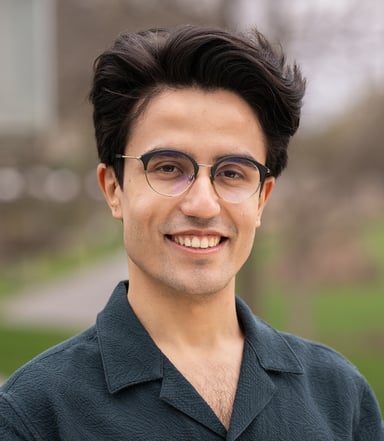
M.S., Department of Psychology, Princeton University, USA
Do depressive symptoms and socio-cognitive decision biases (social negativity/uncertainty, effort sensitivity, delay discounting) predict cross-cultural preferences for AI vs human socio-emotional support?
Target countries:


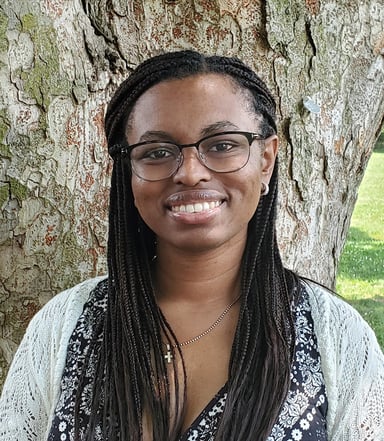
B.A., Institute for Strategy & Technology, Carnegie Mellon University, USA
What motivates civilians, especially frontline residents, to film and share conflict videos online (“civilian witnessing”), and what response (justice, recognition, etc.) do they seek from global audiences?
Target countries:
M.S., Department of Psychology, Cornell University, USA
How do cultural contexts shape everyday status judgments? Do laypeople spontaneously use economic, social, or context-specific indicators in making these judgments and, if so, how?
Target countries:
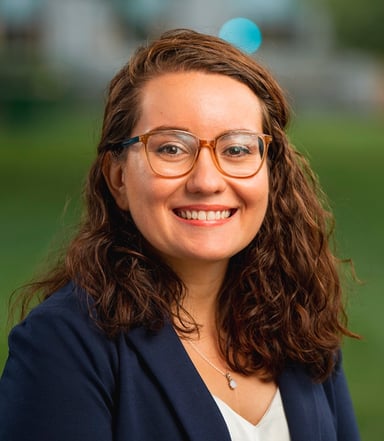
B.A., Department of Political Science, Massachusetts Institute of Technology, USA
How does the framing of protestors' grievances foster support and solidarity for social movements? Survey experiment evidence from Argentina's Student Movement.
Target countries:

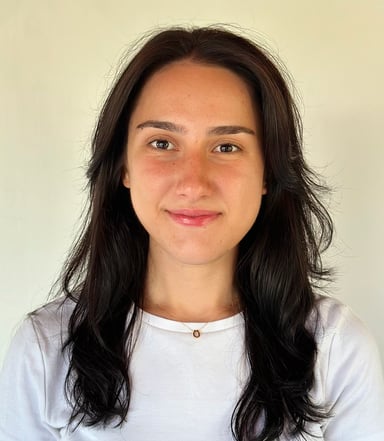
M.S. Department of Psychology, University of Essex, UK
Does perceiving a close other as habitually suppressing emotion predict higher pain via reduced authenticity, lower support, and greater strain across cultures?
Target countries:

M.A., Department of Political Science, Emory University, USA
How does the introduction of counterinsurgency checkpoints affect civilians’ perceptions of security, economic well-being, and trust in government institutions?
Target countries:
B.A.., Department of Psychological and Brain Sciences, University of Toronto Mississauga, Canada
When does rigidity harm vs help goal pursuit and wellbeing across cultures, and through what resource and threat–challenge processes does this occur?
Target countries:
M.A., Department of Psychology, New Mexico State University, USA
Does short-term cultural rule exposure (individualism–collectivism; horizontal–vertical) flexibly shift adult theory of mind? How do fluid intelligence and attention shape these effects?
Target countries:
M.A., Department of Psychology, Princeton University, USA
Do expansive spontaneous thought dynamics function to support emotional recovery from negative affect, and are these dynamics conserved across cultures even as thought content varies?
Target countries:

Ed.M.., School of Education and Information, University of California Los Angeles, USA
Does online empathy plus self-compassion training reduce ethnocentrism and increase positive attitudes, support intentions, and donations toward immigrants more than either alone?
Target countries:

M.A., Department of Psychology, The University of British Columbia, Canada
Is the “entrepreneurial self” more prevalent in Western than non‑Western societies, and does endorsing this self-concept predict similarly ambivalent well‑being across cultures?
Target countries:

M.S., Department of Health and Sport Sciences, Technical University of Munich (TUM) & TUMCREATE, Germany
How do light‑exposure behaviours and constraints vary across cultures and climates, and how can these differences guide global adaptation of the LightUP/LightSPAN intervention?
Target countries:
M.S., Department of Psychology, Boston College, USA
How do different relationship, agreement, and harm features shape perceived moral obligation, and how does the weight of these features vary across cultural contexts?
Target countries:
M.S., Department of Cognitive and Psychological Sciences, Brown University, USA
How do adults across cultures emotionally experience and interpret unfair (stingy vs generous) resource allocations, and how do these emotional responses shape cross-cultural fairness norms?
Target countries:
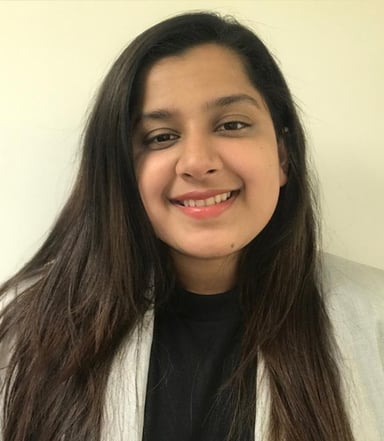
M.A., Department of Government, University of Texas at Austin, USA
What influences public opinion about wartime violations in foreign audiences? How do factors like violation type, perpetrating country, and legal framing shape condemnation?
Target countries:
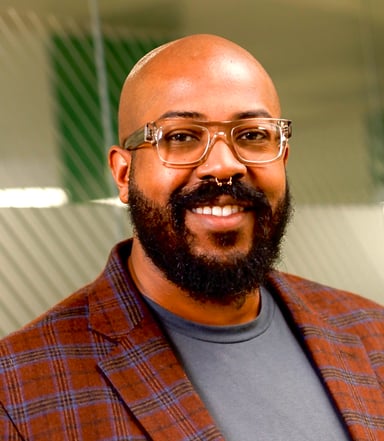
M.S., Experimental Psychology & UCL School of Management, University College London, UK
Do ambiguous political cues from a highly interdependent coworker lead employees to seek or avoid political-identity information, and change how much they share knowledge at work?
Target countries:
Applicants whose submissions ranked among the strongest. They are awarded in addition to the main 25 finalists, because, following initial evaluation, changes to country availability affected the feasibility of their original proposals.

M.A., Department of Psychology, Princeton University, USA
Social learning as a stabilizer of “concept drift”: does exposure to others’ judgments curb prevalence‑induced boundary shifts in tight vs. loose cultures?
Target countries:

M.S., PROMENTA Research Center, University of Oslo, Norway
Do global life satisfaction items (e.g., SWLS, Cantril) validly reflect gaps between current and ideal wellbeing across domains, and are their bias patterns stable across countries?
Target countries:
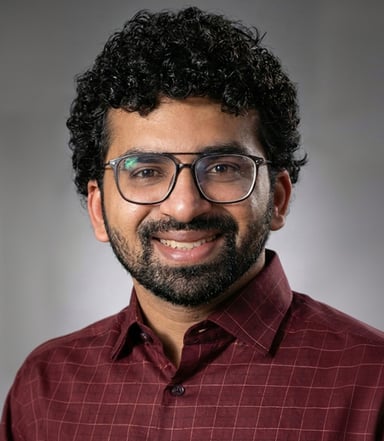
Ph.D. Candidate, Department of Development Economics, Wageningen University & Research
How does stress compress planning and memory horizons, and when does this cognitive truncation shape risk-taking and economic persistence?
Target countries:
Applicants whose submissions ranked among the strongest. They are awarded outside the main list of 25 finalists due to advising relationships with Besample advisors or early adopters. This separate award process is intended to avoid potential conflicts of interest and to ensure fairness and independence in the main competition.

M.S., Department of Psychology and Neuroscience, Duke University, USA
Do people across cultures see AI as having core moral motives (Approach Good, Avoid Bad, Avoid Good, Approach Bad), and how do these attributions shape their trust in AI systems?
Target countries:
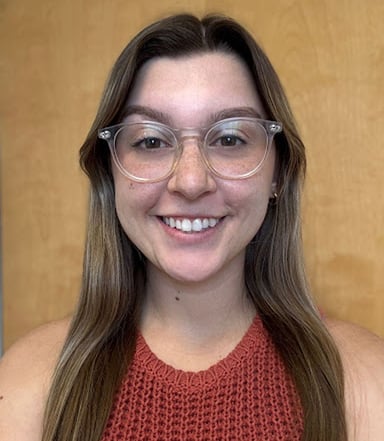
M.S., Department of Psychology, Florida State University, USA
Do attachment, neuroticism, and stress shape bidirectional links between sexual and relationship satisfaction over time in partnered adults across WEIRD and non-WEIRD cultures?
Target countries:

Department of Psychological Science, University of California, Irvine, USA
How do distinct forms of childhood environmental unpredictability (resource vs. social) differentially shape psychological outcomes in adulthood?
Target countries: